


- 15 Aug, 2021
- Hans Education
- One comment
Iran War 2026: Latest Situation, Causes, Global Impact, and What Could Happen Next
The growing conflict involving Iran and Western powers has become one of the most serious geopolitical crises of 2026. Military tensions, airstrikes, and political threats have increased dramatically in recent weeks, raising concerns that the situation could expand into a broader regional war. Governments around the world are closely monitoring the developments because the conflict has the potential to affect global security, international trade, and energy markets.
This article explains the current situation of the Iran war, the reasons behind the conflict, the countries involved, and what the future may hold for the Middle East and the global economy.
Background of the Iran Conflict
The tensions surrounding Iran did not appear suddenly. They are the result of many years of political disagreements, military rivalries, and international sanctions. Iran has long had strained relations with the United States and several Western allies due to issues related to nuclear development, regional influence, and military activities across the Middle East.
The crisis began escalating again in 2026 when military operations and security incidents increased across the Gulf region. Accusations between Iran and its opponents quickly turned into direct military responses, including missile attacks and airstrikes. As the situation intensified, multiple countries became involved either directly or indirectly.
Current War Situation in 2026
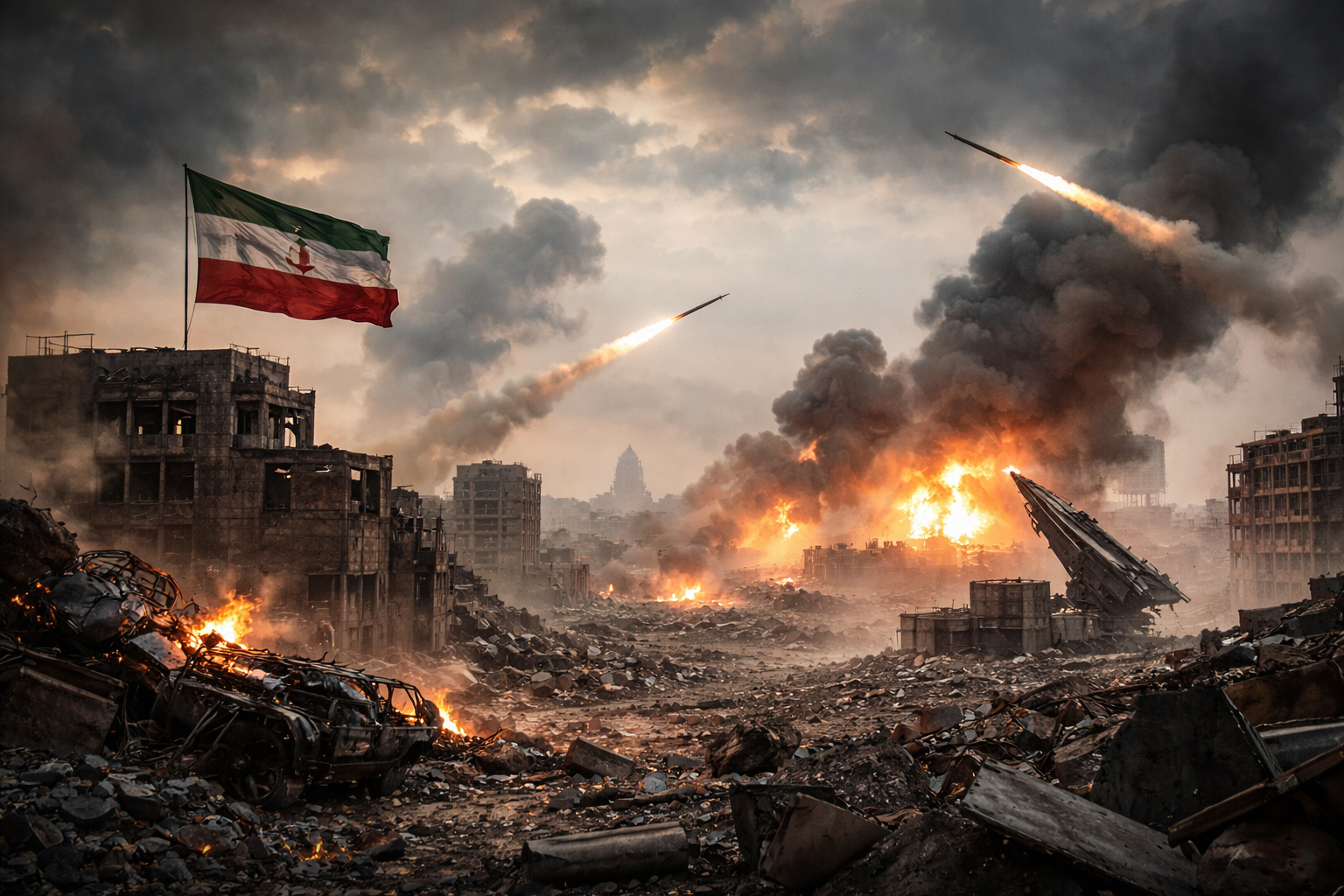
The current stage of the conflict is marked by a series of military actions and counteractions. Missile launches, drone attacks, and strategic airstrikes have been reported across different parts of the Middle East.
Military analysts believe the conflict has entered a dangerous phase where both sides are attempting to demonstrate strength while avoiding a full-scale global war. However, the continued exchange of attacks has made the situation extremely unpredictable.
Several strategic locations have been targeted during the conflict. These include military bases, defense installations, and energy infrastructure sites. Attacks on such locations are often aimed at weakening an opponent’s ability to continue military operations.
At the same time, advanced defense systems have intercepted many incoming missiles and drones, preventing larger destruction in some areas.
Impact on Civilians
While governments and military forces are the primary participants in the conflict, civilians are often the ones who suffer the most. Rising tensions have created fear among ordinary people living in areas close to potential military targets.
In some regions, people have begun preparing emergency supplies and evacuation plans in case the conflict intensifies further. Businesses and public services may also experience disruptions due to security concerns.
The psychological impact of living in a conflict zone can also be significant. Families worry about safety, economic stability, and the future of their communities.
International organizations have expressed concern about the possibility of humanitarian challenges if the conflict continues for a long period.
Strategic Importance of the Middle East
One reason the Iran conflict attracts worldwide attention is the strategic importance of the Middle East. The region contains some of the largest oil and gas reserves in the world and plays a major role in global energy supply.
A key area of concern is the Strait of Hormuz, which is one of the most important maritime routes for international oil transport. A large percentage of the world’s oil shipments pass through this narrow waterway.
Any disruption in shipping through this route could significantly affect global energy markets, leading to rising fuel prices and economic instability in many countries.
Countries Involved in the Conflict
Although the conflict primarily revolves around Iran and Western powers, several countries in the Middle East are also affected by the situation.
The government of Iran has accused foreign powers of attempting to weaken its influence in the region. Meanwhile, the United States and its allies argue that Iran’s military activities threaten regional stability and international security.
Another important player in the situation is Israel, which has expressed serious concerns about Iran’s military capabilities and its influence across neighboring countries.
Several Gulf nations, including Saudi Arabia and the United Arab Emirates, are also closely watching the developments because instability in the region directly affects their security and economic interests.
Economic Impact of the War
One of the most immediate global consequences of the conflict is its effect on the economy. The Middle East plays a crucial role in global energy production, and any disruption in the region can quickly influence international markets.
Oil prices often react strongly to news about military activity in the Gulf region. When tensions increase, investors worry about supply disruptions, which can push energy prices higher.
Higher fuel prices can affect transportation, manufacturing, and everyday expenses for consumers worldwide.
Global financial markets may also experience volatility during periods of geopolitical uncertainty. Investors tend to move their money toward safer assets when conflicts escalate.
Military Technology and Modern Warfare
The Iran conflict also demonstrates how modern warfare has evolved in the 21st century. Unlike traditional wars involving only large armies and ground battles, modern conflicts often involve advanced technologies.
Drone systems, cyber operations, and long-range missile capabilities play a major role in today’s military strategies. These technologies allow countries to strike targets from long distances without large troop deployments.
Air defense systems are also an important part of modern warfare. These systems detect and intercept incoming missiles or drones before they reach their intended targets.
The increased use of technology makes conflicts more complex and sometimes harder to predict.
Diplomatic Efforts and International Response
Despite the ongoing tensions, many countries and international organizations are working to reduce the risk of further escalation. Diplomatic discussions often focus on preventing the conflict from expanding into a larger regional or global war.
Global institutions such as the United Nations regularly call for restraint and dialogue between the involved parties.
Some nations are attempting to act as mediators, encouraging negotiations and confidence-building measures. These efforts aim to create opportunities for peaceful solutions rather than prolonged military confrontation.
However, diplomatic progress can be slow because each side has strong political and security concerns.
Possible Future Scenarios
Experts suggest several possible outcomes for the Iran conflict. The first possibility is that tensions gradually decrease through diplomatic negotiations and agreements.
Another possibility is that the conflict continues at a limited level, with occasional military incidents but no full-scale war. This type of situation is sometimes described as a “controlled escalation,” where both sides attempt to avoid crossing certain boundaries.
The most concerning scenario would be a wider regional war involving multiple countries and large-scale military operations. Such a situation could have severe consequences for global security and economic stability.
Because geopolitical conflicts often evolve quickly, predicting the exact future of the situation remains difficult.
Global Security Concerns
The Iran conflict highlights how interconnected modern international politics has become. A crisis in one region can quickly affect countries across the world.
Security experts warn that prolonged instability in the Middle East could create new challenges related to energy supply, trade routes, and international alliances.
Governments around the world are therefore monitoring the situation carefully and preparing contingency plans in case the conflict expands further.
International cooperation and diplomatic engagement are widely viewed as the most effective ways to prevent the crisis from escalating into a larger global confrontation.
Conclusion
The Iran war situation in 2026 represents a complex and evolving geopolitical crisis. Military tensions, strategic interests, and political disagreements have combined to create a volatile environment in the Middle East.
Although the conflict currently involves targeted strikes and strategic responses rather than a full-scale war, the potential for escalation remains a major concern.
The future of the situation will likely depend on a combination of diplomatic negotiations, military decisions, and international cooperation. As global leaders continue to monitor the developments, the hope remains that peaceful solutions can eventually replace confrontation.
For now, the world continues to watch the region closely, aware that the outcome of this conflict could influence global politics and economic stability for years to come.

Será información específica