



- 10 Oct, 2021
- Hans Education
- No comment
Current Affairs
Odisha Fiscal Health Index 2026 released
The Odisha government has been ranked as the best-performing state in the Fiscal Health Index (FHI) 2026, a report that measures how effectively Indian states manage their finances. This index evaluates states on parameters such as revenue collection, expenditure quality, debt management, and fiscal discipline.
The FHI provides a comprehensive view of state finances, helping policymakers and analysts identify areas of strength and improvement. Odisha’s top position highlights strong financial management, responsible budgeting, and sustainable economic planning.
This recognition reflects the state’s efforts in maintaining fiscal stability while supporting developmental priorities, setting an example for other states.
Odisha Parba 2026: Celebrating Odisha’s Culture in New Delhi
The ‘Odisha Parba 2026’ cultural festival was recently inaugurated in New Delhi, offering a vibrant showcase of Odisha’s rich heritage, art, music, and traditions. The festival features performances, handicrafts, traditional cuisine, and exhibitions that reflect the state’s cultural diversity and historical legacy.
Organized to promote Odisha’s identity and creativity on a national platform, the event also aims to strengthen cultural exchange and awareness among visitors from across India.
This festival highlights the unique art forms and traditions of Odisha, making it an important platform for both cultural preservation and tourism promotion.
Pradhan Mantri Vanbandhu Kalyan Yojana – Empowering Tribal Communities
The Pradhan Mantri Vanbandhu Kalyan Yojana (PMVKY) is a government initiative designed to improve the living conditions of tribal populations in India. The scheme focuses on education, healthcare, livelihood opportunities, and basic infrastructure to ensure holistic development in tribal areas.
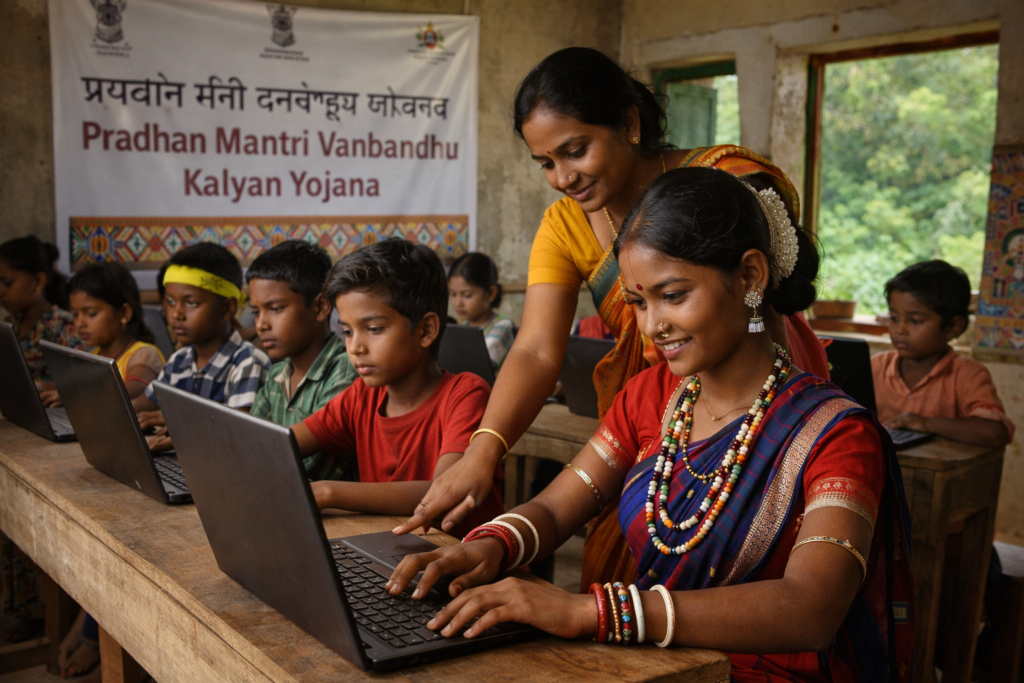
PMVKY aims to promote economic self-reliance, social welfare, and cultural preservation among tribal communities. It provides support for skill development, financial inclusion, and health services, while also encouraging sustainable practices and the protection of traditional livelihoods.
By addressing the unique challenges faced by tribal populations, the scheme plays a key role in reducing regional disparities and fostering inclusive growth across India.
Razorpay Agent Studio – AI-Powered Payment Automation Platform
Razorpay Agent Studio is an AI-driven platform designed to help businesses automate payment processes and revenue operations. Using smart AI agents, the platform can detect payment issues, initiate actions, and reduce manual intervention, making payment management faster and more efficient.
Key Features:
- Automated Payment Handling: Agents can identify failed transactions, subscription drops, and other payment challenges, and take corrective actions automatically.
- Customizable AI Workflows: Businesses can use ready-made agents or create their own to suit specific operational needs.
- Customer Engagement: Agents help recover abandoned carts, send payment reminders, and re-engage customers.
- Real-Time Insights: Businesses receive updates on settlements, cash flow, and transaction summaries automatically.
By integrating AI directly into the payment system, Razorpay Agent Studio allows smarter, faster, and more reliable financial operations, helping companies save time and improve revenue collection.
Global Conference on Women in Agri‑Food Systems (GCWAS‑2026)
The Global Conference on Women in Agri-Food Systems (GCWAS 2026) is being held in New Delhi from 12–14 March 2026. The event brings together policymakers, agricultural experts, researchers, and organisations to focus on enhancing the role of women in agriculture and food systems.
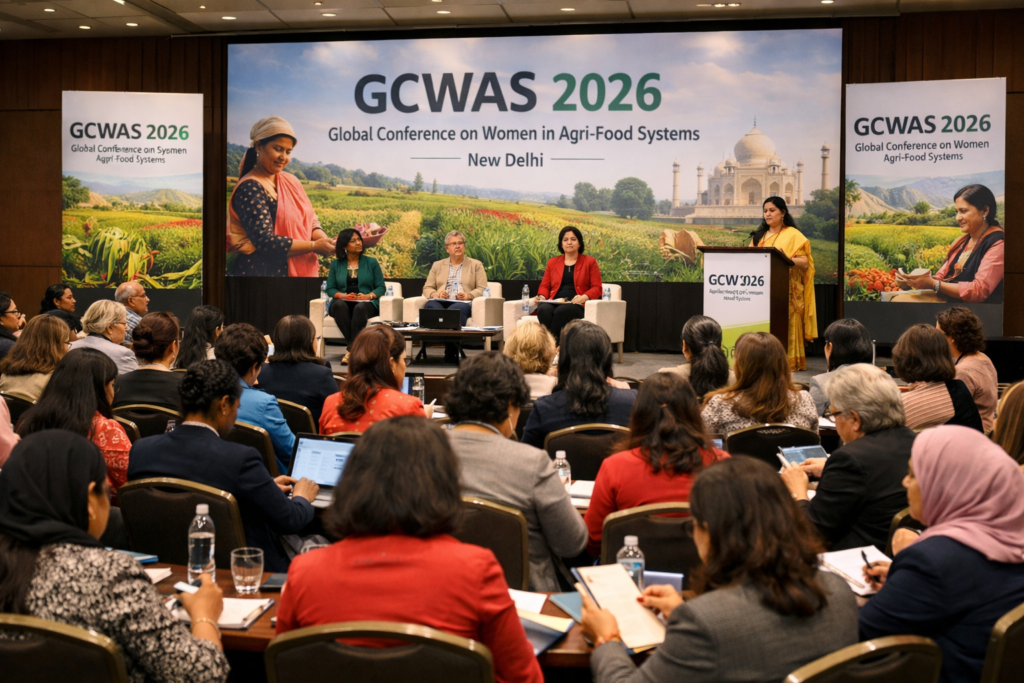
Key Highlights:
- Inaugurated by President Droupadi Murmu, the conference highlights the importance of women’s participation in farming, leadership, and policy-making.
- Sessions focus on gender-inclusive growth in agriculture, bridging gaps in access to technology, decision-making, and promoting women’s contributions across the agri-food sector.
- Hosted at the ICAR Convention Centre, GCWAS 2026 features panel discussions, expert talks, and collaborative policy dialogues.
Purpose:
The conference aims to empower women in agriculture, promote sustainable and inclusive food systems, and encourage innovative practices that strengthen women’s impact on global agri-food development.
India Plans ₹1 Trillion Fund to Boost Chip Manufacturing
The Indian government is set to launch a ₹1 trillion (around $11 billion) fund to strengthen the country’s semiconductor and chip manufacturing ecosystem. The initiative aims to promote domestic production, attract global chipmakers, and reduce dependency on imports.
Key Features:
- Support for chip design and development to encourage innovation in India.
- Funding for manufacturing infrastructure and advanced equipment to help build semiconductor facilities.
- Strengthening the supply chain to create a competitive and resilient domestic ecosystem.
This fund complements existing initiatives under the India Semiconductor Mission (ISM 2.0) and is part of India’s broader plan to enhance technological self-reliance, boost high-tech manufacturing, and secure its position in the global semiconductor industry.
R.N. Ravi Sworn In as Governor of West Bengal
Ravindra Narayana Ravi was sworn in as the 22nd Governor of West Bengal on 12 March 2026, taking over from C.V. Ananda Bose, who resigned earlier this month. The oath ceremony was held at Lok Bhavan in Kolkata and administered by the Chief Justice of the Calcutta High Court.
West Bengal Chief Minister Mamata Banerjee and other dignitaries attended the event. Banerjee welcomed Governor Ravi, highlighting Bengal’s cultural richness and diversity, while Ravi emphasized his commitment to respecting the state’s intellectual and cultural heritage.
R.N. Ravi, a former Intelligence Bureau officer, has previously served as the Governor of Nagaland, Meghalaya, and Tamil Nadu. His appointment comes ahead of the 2026 Assembly elections, making it a significant development in the state’s political landscape.
Supreme Court: Parental Income Alone Cannot Decide OBC Creamy Layer Status
In a recent Supreme Court judgment, the court clarified that income alone cannot be the only factor to decide whether a candidate falls in the creamy layer of the Other Backward Classes (OBC) category. This affects eligibility for reservation benefits under the OBC quota.
Key Points of the Ruling
- The court held that parental income by itself cannot determine creamy layer status for OBC reservation. Other factors such as job status, rank, and social classification of the parents must also be considered.
- This means that even if a family’s income is high, a candidate may still qualify for OBC non‑creamy layer status if other conditions about the parents’ occupation or position do not place them in the advanced category.
- The judgment also addressed discrepancies arising from treating government jobs and private sector or PSU positions differently when deciding creamy layer status.
Why It Matters
- The decision provides clarity on eligibility for reservation benefits under the OBC category and prevents automatic exclusion based solely on income.
- It ensures a more balanced and fair evaluation of backward class status by considering both economic and social factors.
Araku Kouni Tribal Millet Menu Launched in Andhra Pradesh
Andhra Pradesh Chief Minister N. Chandrababu Naidu has launched “Araku Kouni”, the state’s first tribal millet‑based food menu, highlighting traditional tribal cuisine and promoting healthy eating habits. The launch took place during a District Collectors’ Conference in Vijayawada, where Naidu unveiled the meal concept developed from authentic tribal recipes.
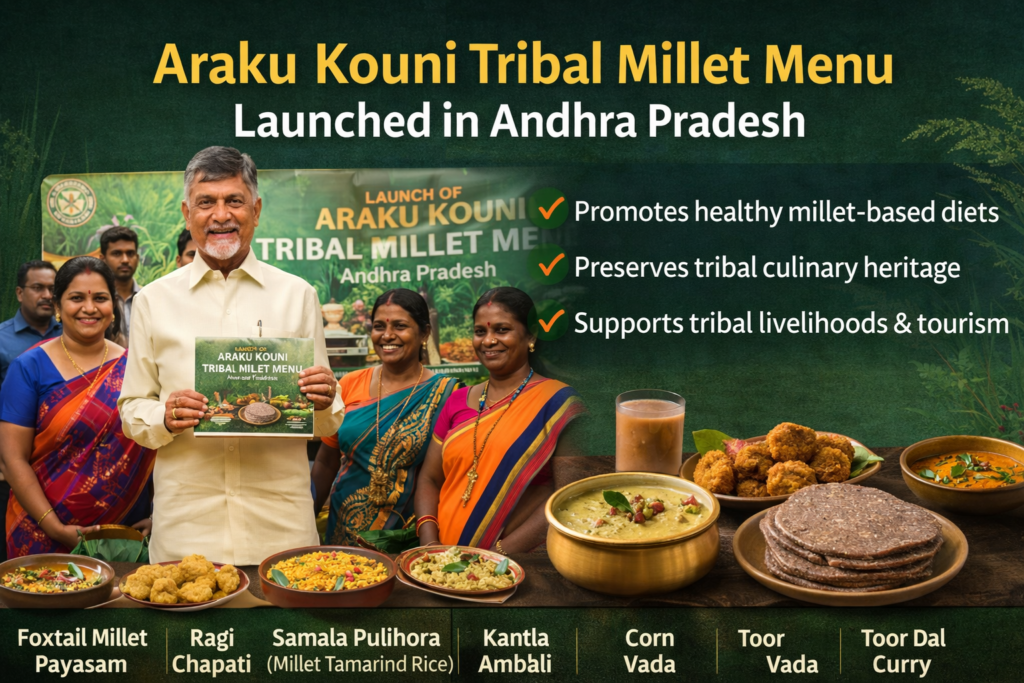
The Araku Kouni menu includes dishes made from locally grown millets such as korra payasam, ragi chapati, samala pulihora, kantla ambali, corn vada, and toor dal curry, reflecting the rich culinary heritage of tribal communities from the Alluri Sitarama Raju district.
The Araku Kouni menu includes dishes made from locally grown millets such as korra payasam, ragi chapati, samala pulihora, kantla ambali, corn vada, and toor dal curry, reflecting the rich culinary heritage of tribal communities from the Alluri Sitarama Raju district.
