


- 10 Apr, 2026
- Hans Education
- No comment
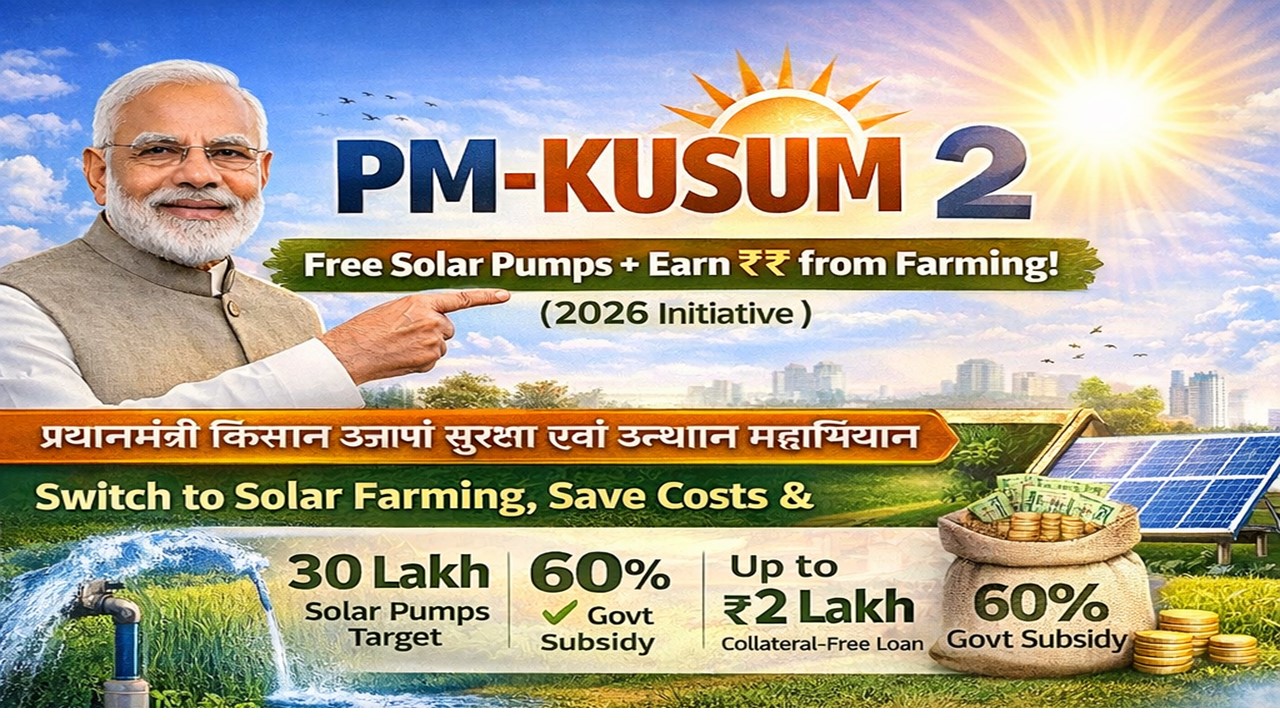
PM-KUSUM 2 Scheme 2026: Get Free Solar Pump + Earn ₹₹ from Farming!
Get free solar pumps under PM-KUSUM 2 Scheme 2026. Enjoy 60% subsidy, reduce irrigation cost, and earn extra income by selling solar power. Apply now!
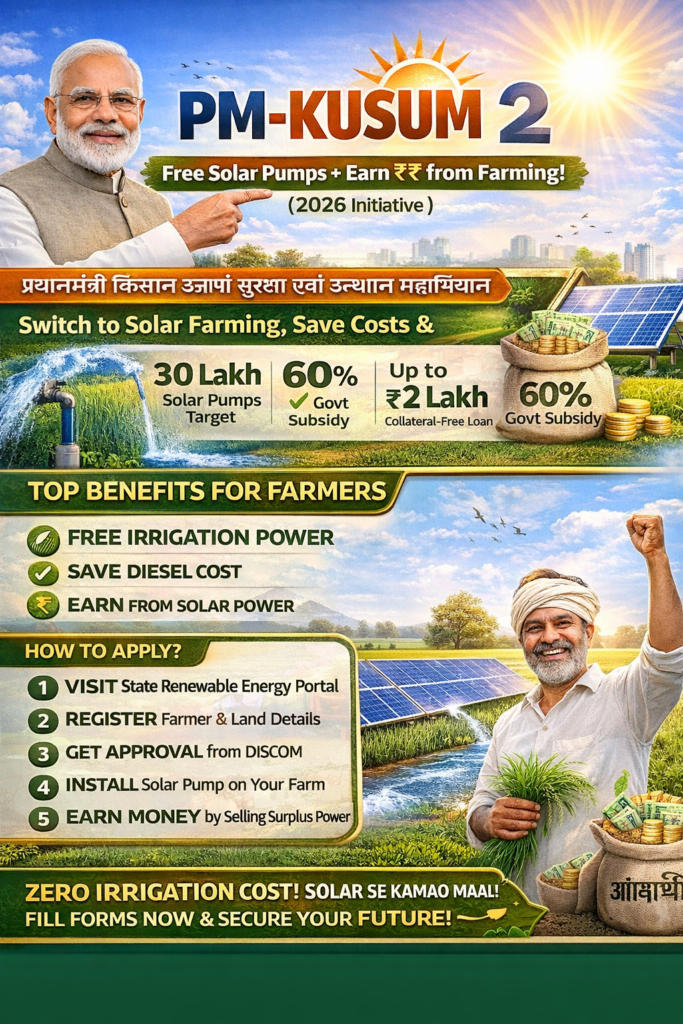
What is Agrivoltaics?
Agrivoltaics (Agriculture + Photovoltaics) is a smart farming method where solar panels are installed above crops, allowing the same land to be used for both agriculture and solar energy production at the same time.
“Farming + Solar Power = Agrivoltaics” Agrivoltaics: A Smart Farming Innovation
Agrivoltaics is emerging as one of the most promising innovations in modern agricultural energy systems. In this approach, solar panels are installed on elevated structures (around 10–16 feet above ground), allowing normal farming activities to continue without interruption.
This design ensures that agricultural machinery such as tractors, harvesters, and ploughs can operate freely beneath the panels, while crops grow alongside energy generation. As a result, the same piece of land is efficiently used for both farming and electricity production. Agrivoltaics: A Smart Farming Innovation
Agrivoltaics is emerging as one of the most promising innovations in modern agricultural energy systems. In this approach, solar panels are installed on elevated structures (around 10–16 feet above ground), allowing normal farming activities to continue without interruption.
This design ensures that agricultural machinery such as tractors, harvesters, and ploughs can operate freely beneath the panels, while crops grow alongside energy generation. As a result, the same piece of land is efficiently used for both farming and electricity production.Income Potential with Agrivoltaics
Agrivoltaics offers a significant boost to farmers’ income compared to traditional land-use models.
With agrivoltaics, income can increase to ₹1 lakh+ per acre per year
In conventional solar land leasing, farmers earn around ₹60,000 per acre annually
Practical Example
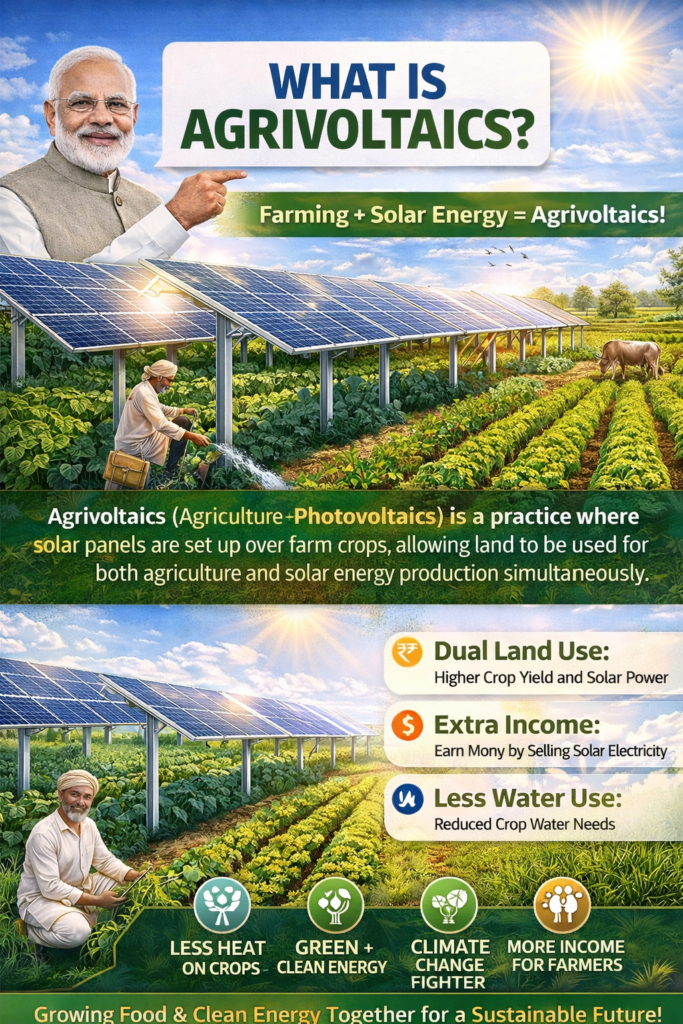
Consider a 1 MW solar plant installed on approximately 5 acres of land:
Diesel Savings (irrigation): ₹6,000 – ₹7,000 per month
Solar Power Income: ₹80,000 – ₹1,00,000 per month
Farming Income (under panels): ₹50,000 – ₹70,000 per year
Financial Assistance & Subsidy Breakdown under PM-KUSUM Scheme 2.0
PM-KUSUM 2.0 follows a well-structured subsidy model designed to make solar adoption affordable and accessible for farmers across India.
Standard Subsidy Structure (30-30-40 Model)
Under the scheme:
- 30% – Central Government (Central Financial Assistance)
- 30% – State Government Subsidy
- 40% – Farmer’s Share
This shared-cost model reduces the financial burden on farmers and encourages large-scale solar adoption.
Easy Financing Option
Farmers are not required to pay the full 40% upfront.
- Banks can provide up to 30% loan under Priority Sector Lending
- Farmers may need to pay only 10% of the total cost initially
Special Benefits for Hilly & North-Eastern States
In regions like:
- Jammu & Kashmir
- Himachal Pradesh
- Uttarakhand
- North-Eastern states
The subsidy structure is even more beneficial:
- 50% – Central Government Assistance
- 30% – State Government Subsidy
- 20% – Farmer’s Contribution
This reduced contribution significantly improves accessibility in difficult terrains.
Step-by-Step Application Guide for PM-KUSUM Scheme
Step 1: Verify Land Records
The applicant must be the legal owner of the land where the solar system will be installed. Ensure that the name on your Aadhaar card matches the land ownership documents (such as Khasra or Khatauni).
Step 1: Verify Land Records
The applicant must be the legal owner of the land where the solar system will be installed. Ensure that the name on your Aadhaar card matches the land ownership documents (such as Khasra or Khatauni).
Step 2: Check Substation Distance
For installations under Component A and Component C, the land should ideally be within 5 km of a power substation.
Farmers should also visit their local DISCOM office to confirm:
Capacity for power integration
Grid connectivity availability
Step 3: Obtain EPC Quotations
Before applying, collect 2–3 quotations from registered EPC companies.
Each quotation should clearly include:
Complete system components
Solar panel details
Inverter capacity
Final Insight
“PM-KUSUM 2.0 turns solar investment into a low-cost opportunity, where farmers pay less but gain more.”
